



EUKI Living Streets
How to experiment new forms of city life

EUKI Living Streets – Cities Page
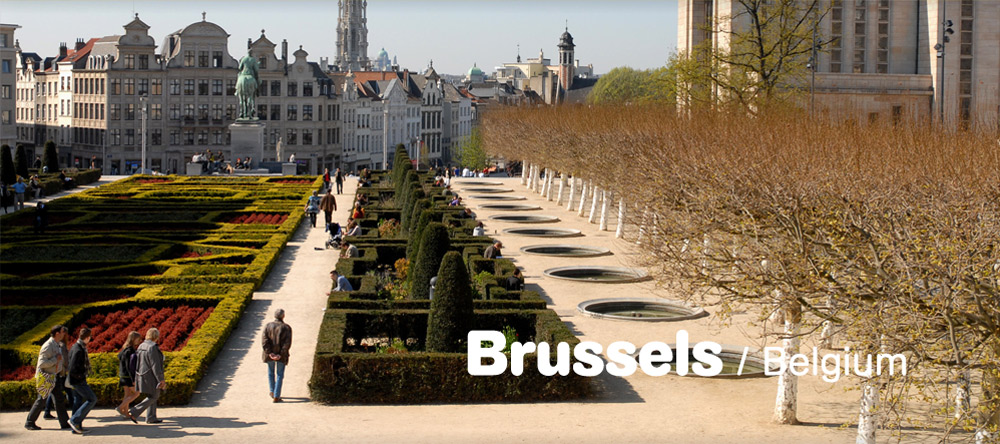
Brussels, Belgium
How are Living Streets organised in Brussels?
Each Living Street requires a preparation period of about three months and thereafter is publicly implemented during one to two months. Living Streets can be organised at any time of the year. An application needs to be submitted by the initiators and the city of Brussels and the Police department need to give the green light for it. A project can be allocated a budget between 1,000 and 5,000 euros.Brussels Participation is the service of the City of Brussels that supports project leaders launch a Living Street. There is close collaboration with various municipal departments : Participation, Green Spaces and Environment.
The main requirements to organise a Living Street :
- Any inhabitant of the City of Brussels can launch a Living Street where s/he resides.
- The initiator can be an individual, an association, a neighborhood committee or residents’ collective.
- The initiator needs to mobilise at least three inhabitants of the street and create a leading group.
You live in your street, you know it better than anyone else. To know how you want to live in your street, we need your help. The existing situation can always improve and we think that you can play a key role here.
Els Ampe, Deputy Mayor in charge of public works, mobility and vehicle fleet, City of Brussels
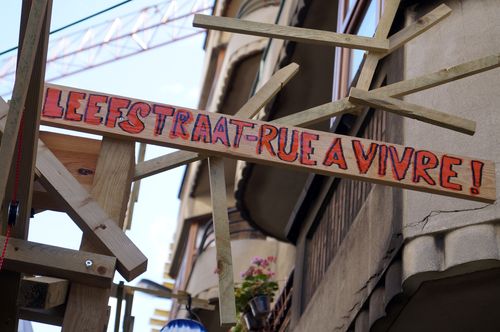
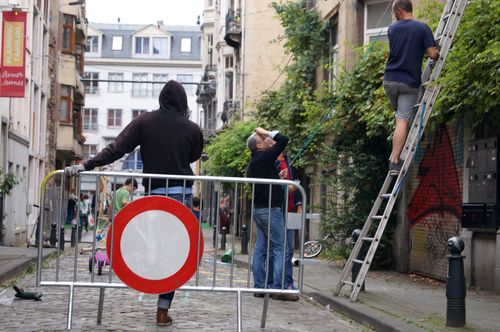
The creation and implementation phases of a Living Street:
- Define the project : choose the location (one or several streets, a market, a public square). At this moment, the steering groups meet Brussels Participation and other municipal services to get feedback on their first ideas and actions they want to implement. To smoothen this step, the municipality prepared a Vade Mecum, a manual helping project leaders to frame their project, working method and budget.
- Field work done by inhabitants : they engage with the other inhabitants via surveys and meetings to choose the actions and to create the steering group, composed of a minimum of three residents.
- Submit the application : there is a form that the steering group needs to fill in and submit to Brussels Participation that details the needs of the street, the vision for their street as well as precise actions and timeframe with a budget. They submit their request for authorisations to be able to close the streets to cars and to organise events in the public space. Via this ’Declaration claim’ form, project leaders agree to respect the Vade Mecum.
- The City of Brussels can advance 80% of the amount requested to the project leader. The remaining 20% will be paid after the presentation of the final report and all financial evidence and after approval by the Council.
- Launch of public activities during the agreed period.
- Submit a final report and all financial evidence.
The municipality of Brussels communicates and promotes the Living Streets via information sessions to citizens in order to raise awareness and encourage the organisation of Living Streets. The initiative has been implemented in 8 streets so far.
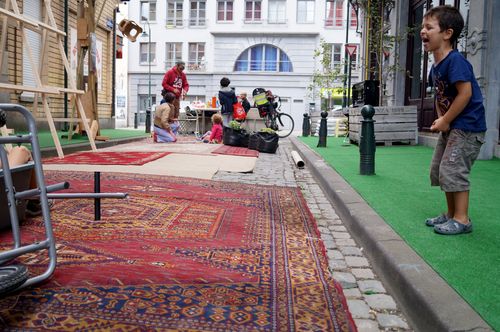
In Brussels, the Living Streets tackled many aspects such as prostitution, need for positive animation of public spaces and ownership by their inhabitants, need for green spaces, need for silence in an area impacted by public works during several years, reflecting on the need for a residential zone for meeting and sharing among inhabitants.
What are the lessons learned?
- Everyone wants to join the party, but no one wants to organise it ! It is difficult to move from interest in a project to concrete action as many people are enthusiastic but not necessarily ready to take action to implement and steer the project.
- Involving the press and media too early in the process puts pressure on people
- There was no vandalism during the project, all equipment was respected by the neighbours and other users. However, after the project ended, some equipment was taken over by homeless people.
- A Living Street takes long to organise, it is multifaceted and not immediately visible, making it complex to handle.
- Strong social ties were developed among the neighbours and the resistance of some inhabitants has been overcome by allowing them to concretely visualise the city of the future.
- Residents’ ownership of their street increased via DIY equipment that helped embellish the public space, make it more pleasant and adapted to citizens’ needs and expectations.
For the future of the initiative in Brussels, it was concluded that a Living Streets needs to be extended over longer periods of time in order to meet the expectations of the residents and put them in practice. It is also important to organise several Living Streets in the same spot, to experiment and possibly implement certain solutions on a permanent basis.
Contact:Ann Van de Vyvere, Coordinator, City of Brussels
Further information:For more information click here : FR and NLIn Brussels, there are numerous programmes and actions dedicated to residents (see the Public Policy Programme 2012-2018).
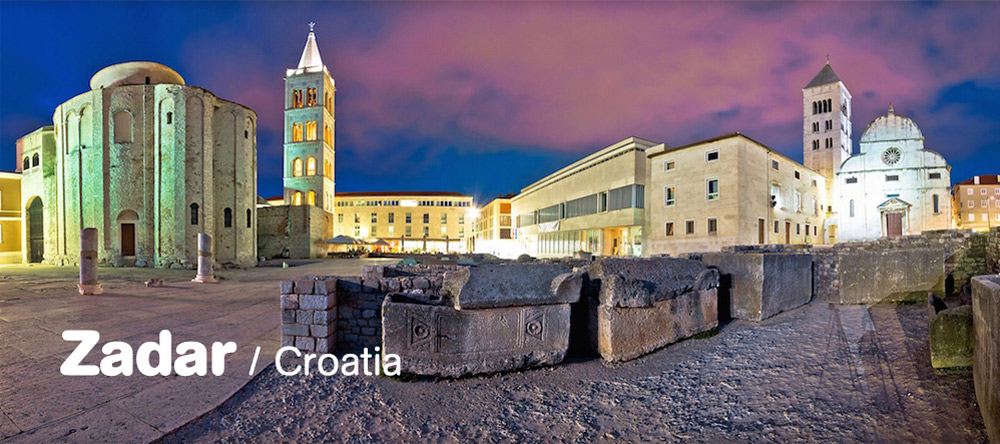
Ivanic-Grad, Croatia
Context
The city of Ivanić-Grad is well developed thanks to gas and oil resources, but this has a negative impact on the local environment. The city also faces two important demographic issues: aging population and emigration. Due to the prolonged economic crisis, there are currently empty commercial spaces in the city centre, as well as abandoned land suitable for agriculture. This land belongs to the municipality, to the ministry of agriculture and to private owners who moved out of Ivanić-Grad.
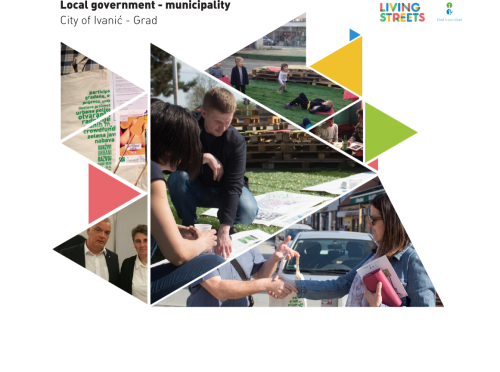
Local food production and consumption, circular economy and changing of mind-sets
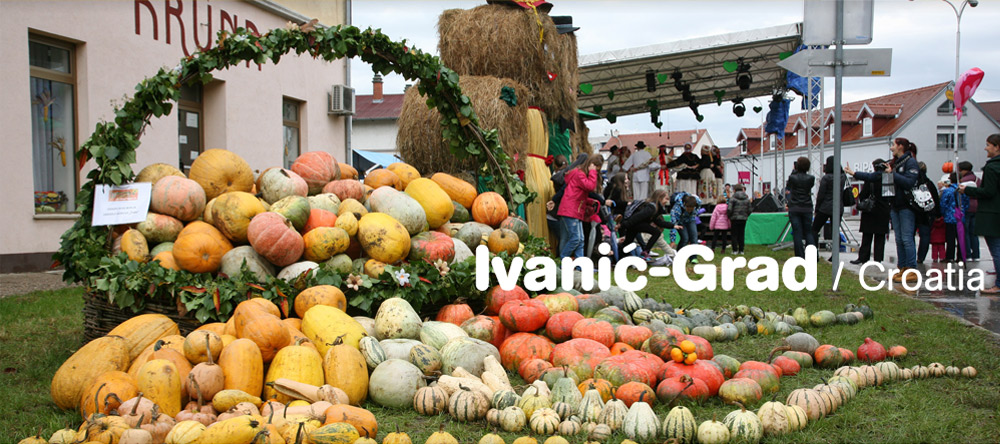
In order to address the issue of local food production, in the first edition of Living Streets the municipality organised a pumpkin production contest to attract citizens to the Living Streets initiative and link with an existing popular event: the pumpkin fest.
To all the citizens who filled in the application form, the Mayor of Ivanić-Grad distributed 100 urban gardening sets, including pumpkin seeds, tools for gardening, labels for seeds and instructions. In this framework, the municipal owned land was temporarily offered to citizens who live in multi-apartment buildings and do not own gardens to use it for urban gardening. Their results encouraged them to continue in the coming years, creating a demand for more land for the future Living Streets editions.Therefore, the municipality is relaying with the national ministry of agriculture to use the plots of currently abandoned land. The municipality is also discussing with citizens who do not use their land in order to make it available for urban gardening. Local family farms expressed interest to buy the locally produced vegetables and fruits. Citizens and local businesses were therefore connected by the municipality to collaborate in the future.
As a Deputy Mayor, I have been following the Living Streets Project since the very beginning because I felt it could be very beneficial to our citizens.During the project I was actively involved in urban gardening. Citizens motivated by my own example of planting pumpkins, started planting them as well. At the end of a successful gardening season, we organized a seed exchange and prepared ourselves for the next season.I think citizens will continue to partake in this interesting project even after its official ending and encourage each other in planting pumpkins which will contribute to strengthening the traditional city manifestation.
Željko Posilović, Deputy Mayor, City of Ivanić-Grad
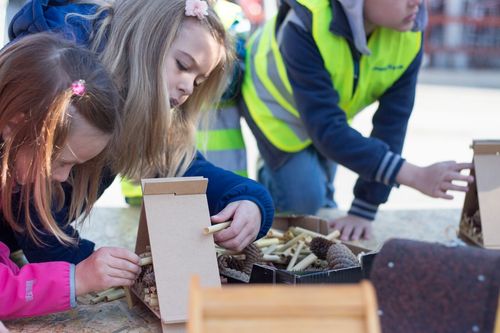
An urban gardening workshop was set up, including distribution of specific toolkits for citizens (pumpkin seeds, tools for gardening, labels for flower beds and instructions). In October the citizens will present their results via a competition (for example: the best pumpkin cake).Also 4 schools and 4 kindergardens participated via an urban agriculture process focusing on aromatic herbs. Several highshools and NGOs were also involved, namely the Red Cross working with citizens with disabilities.
Furthermore, Living Streets offered the opportunity to exchange experience with Macedonian experts on agriculture production leading to an international trading contract signed between businesses from Ivanić-Grad and experts from Macedonia. In this framework, Macedonian expertise will be transferred to Ivanić and in turn, Ivanić will export innovative products developed within the Living Streets such as urban gardening sets, pumpkin seeds, local eco-toys and eco-devices prepared by local designers and companies. From a social perspective, the project is expected to link up many citizens in Ivanić who are from Macedonia and it is likely that they will reconnect with their families from Macedonia.
In the framework of Living Streets, the municipality encouraged small businesses to cooperate and to communicate on common goals they are reaching for and not to see themselves as competitors. Thus, the NGO Brenta was created to regroup wine producers in order to help them cooperate better. Many produce Škrlet wine, leading to the organisation of a new local event: the festival of the Škrlet wine. They are also now responding together to large market demands for local wine, to which they cannot respond individually. The municipality acted here as a facilitator encouraging networking within its territory by connecting people and businesses.
Ivanić-Grad also organised a local workshop on crowdfunding to link up students and existing and future local producers with two goals: future orientation of the students from the middle school and set up local businesses. As a result, a local cookie factory will be opened, the local bakery developed new products and urban furniture for Living Streets on the main square. Also gardening toolkits and insect hotels were produced thanks to Living Streets connecting Design students who designed the elements, skilled pensioners who pre-crafted the elements according to the drawings and kindergarten children who assembled them. All this got together at the main city square during the green living-room events in Ivanić. So, after the crowdfunding crash-course, the students are considering a start-up in urban design now.
All that it took to make this a true social innovation is the local radio station sharing the right news, passionate handy pensioners, creative and proactive design students and open-minded municipal staff…gathered together via Living Streets in Ivanić.
Local consumption and awareness raising
During the Christmas period, the municipality encouraged the citizens to buy local presents (food, drinks, toys). It turned out that many citizens did not know where to buy these products locally, nor did they know who the local producers were and whether they had a shop. To solve this issue, in the main square an exhibition office was built temporarily and local producers could sell their products there prior to the Christmas period. This proved to be very successful. Thanks to Living Streets, the mind-sets of the citizens are changing regarding the importance of local production and on their consumption habits.
A local pedestrian city centre
In the past, the municipality envisaged to close the city centre to cars, but this was perceived as an unpopular measure at the time.
During the Living Streets, this car free city centre was experienced twice for two weeks during different periods in 2017. At first local businesses and shop owners were worried that their sales would decrease. However, during the urban workshop they understood that even if the square is closed to cars they would still be able to deliver goods. Besides, when they realised that citizens are asking for the square to be pedestrian, they understood that this might be an opportunity for them. The municipality promised to do some communication activities to promote their businesses. Positive results from other European cities were shown to prove that car-free city centres do not come only with problems, but also with solutions.
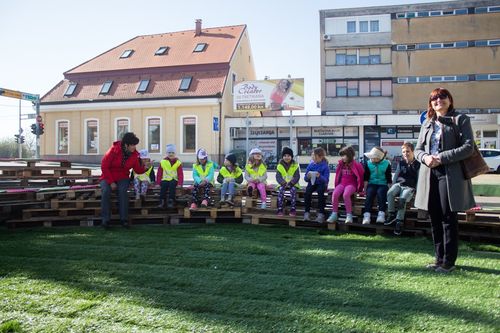
After experimenting and evaluating, the following conclusions were drawn:
- Young citizens and the families with kids see the main square as a safe and thrilling place with green spaces, playgrounds, cafés.
- On the other hand, other citizens (especially middle aged males) voted against closing the main square to cars (they usually can park their individual car in front of the shops).
- It is felt that activities organised within the Living Streets were still not sufficient to change the mind-sets completely and help citizens see that it is much healthier to bike and to walk.
- To make a pedestrian square, budget is required for infrastructure and this is not included in the municipal budget for the next two years. However, experts within the project suggested some soft activities and minor works that do not require a huge budget.
In the near future, the municipality of Ivanić will need to change its urban plans especially related to the historic city centre. It is planned to organise another urban workshop and citizens will be invited again to express their opinions, needs and suggestions.
Only political commitment and a decision from the mayor to close the square for a longer period, for instance six month, can have a bigger effect and allow city officials and citizens to better assess the acceptance and impact of a pedestrian main square in Ivanić.
Contact:Vlatka Berlan Vlahek, Municipality of Ivanic-Grad
Further information:www.facebook.com/livingstreetivg/
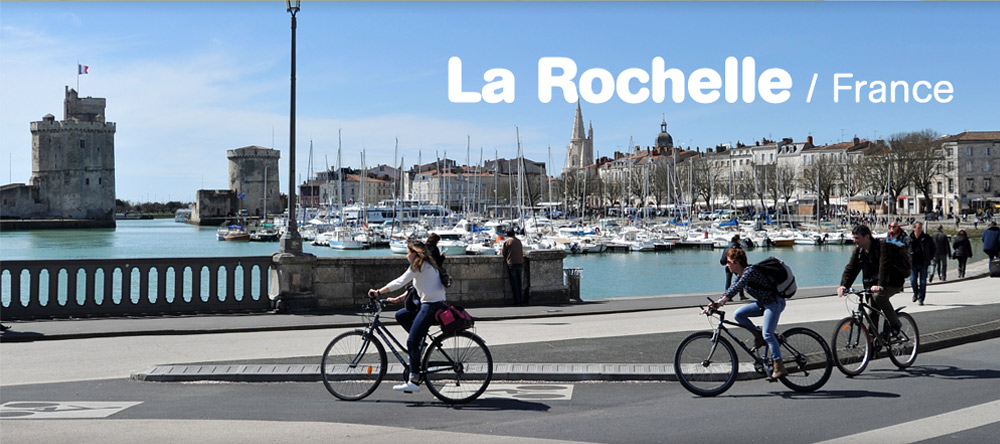
La Rochelle, France
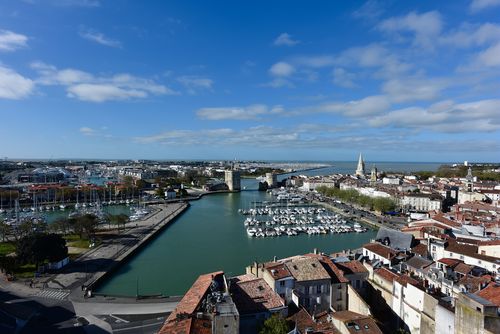
Increase home-to-school and school-to-home travel by foot and by bike: The Children’s Street
The Pierre Loti School is situated in a social mixed area within a small district. An attractive park is situated in front of the school but the Pierre Loti Avenue, supporting 8,000 vehicles daily, disconnects this green area from the school. The parents are afraid to let the children go by bike or by foot to school and think that cars are the safestoption to take the children to school. Many of the school children do not even know how to ride a bike. For these reasons, the Mobility Department of the municipality contacted the school to see if together they could transform this busy road into a car-free street for a day. This provided the opportunity to the children to play in the street and in the park and have fun while learning how to ride a bike. The street in front of the school was closed for one day in June 2016 and May 2017.
The activities organised included: home to school escort by bicycle (organised by the bicycle Police Brigade/Bicycle School) and by foot (organised by the parents), a bike and games lending library, a bicycle training area, some workshops and information on bicycle repairs, biking safety, using public transport, free trial of different cargo bikes with bike stores.
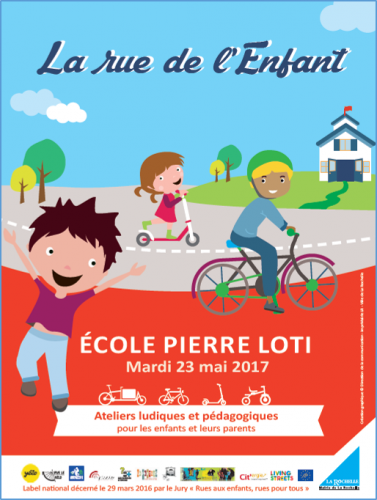
This initiative has enabled the creation of a playground in the park next to the school and bicycle parking places. It also favoured inter-generational exchange between the school and the nearby retirement home. Parents launched a petition to have shared urban gardens in the park. It was decided that 60,000 euros will be spent by the municipality to set the garden up which will be open to all residents in the neighbourhood, including the retirement home. Besides, bike stores have increased their income and are selling more bikes, including foldable bikes and cargo bikes. Elected representatives, teachers and parents are now reflecting on how to include bike learning in the school programme.
The Children’s Street initiative is sustained by several activities. Following the 2 one-day events organised by the municipality, the school and the parents have organised on their own a 3rd event in April 2018, including a bike market and a party in the street, with the participation of associations. The municipality initiated the process and now parents, children and school teachers are responsible to organise such events in the future, with the municipality offering support, but not acting as a driving force anymore. In addition, other schools are interested by this initiative and a new Children’ Street with another school will be organised in a different neighbourhood.
Develop the attractiveness of commercial areas in the city centre
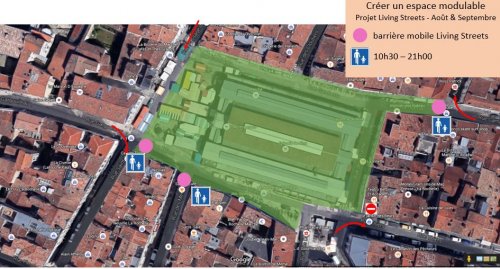
The first experiment took place in the old market place from July to August 2016. This place is today used as a big round-about for cars, reducing the space available for pedestrians. The shopkeepers would like to reduce the car’s presence but at the same time authorise freight access for the market in the morning. A modular access was therefore needed. A solution was found together to regulate the access, using colourful signs to mark the limits of the pedestrian zone during the event.
From July to August 2017, the second experiment was organised in the Saint-Nicolas district, a small shopping area, a little hidden away just behind the old harbour. The aim was to make this neighbourhood visible from far away and attract more people to this area. All the shops are


Brussels, Belgium
How are Living Streets organised in Brussels?
Each Living Street requires a preparation period of about three months and thereafter is publicly implemented during one to two months. Living Streets can be organised at any time of the year. An application needs to be submitted by the initiators and the city of Brussels and the Police department need to give the green light for it. A project can be allocated a budget between 1,000 and 5,000 euros.Brussels Participation is the service of the City of Brussels that supports project leaders launch a Living Street. There is close collaboration with various municipal departments : Participation, Green Spaces and Environment.
The main requirements to organise a Living Street :
- Any inhabitant of the City of Brussels can launch a Living Street where s/he resides.
- The initiator can be an individual, an association, a neighborhood committee or residents’ collective.
- The initiator needs to mobilise at least three inhabitants of the street and create a leading group.
You live in your street, you know it better than anyone else. To know how you want to live in your street, we need your help. The existing situation can always improve and we think that you can play a key role here.
Els Ampe, Deputy Mayor in charge of public works, mobility and vehicle fleet, City of Brussels
The creation and implementation phases of a Living Street:
- Define the project : choose the location (one or several streets, a market, a public square). At this moment, the steering groups meet Brussels Participation and other municipal services to get feedback on their first ideas and actions they want to implement. To smoothen this step, the municipality prepared a Vade Mecum, a manual helping project leaders to frame their project, working method and budget.
- Field work done by inhabitants : they engage with the other inhabitants via surveys and meetings to choose the actions and to create the steering group, composed of a minimum of three residents.
- Submit the application : there is a form that the steering group needs to fill in and submit to Brussels Participation that details the needs of the street, the vision for their street as well as precise actions and timeframe with a budget. They submit their request for authorisations to be able to close the streets to cars and to organise events in the public space. Via this ’Declaration claim’ form, project leaders agree to respect the Vade Mecum.
- The City of Brussels can advance 80% of the amount requested to the project leader. The remaining 20% will be paid after the presentation of the final report and all financial evidence and after approval by the Council.
- Launch of public activities during the agreed period.
- Submit a final report and all financial evidence.
The municipality of Brussels communicates and promotes the Living Streets via information sessions to citizens in order to raise awareness and encourage the organisation of Living Streets. The initiative has been implemented in 8 streets so far.
In Brussels, the Living Streets tackled many aspects such as prostitution, need for positive animation of public spaces and ownership by their inhabitants, need for green spaces, need for silence in an area impacted by public works during several years, reflecting on the need for a residential zone for meeting and sharing among inhabitants.
What are the lessons learned?
- Everyone wants to join the party, but no one wants to organise it ! It is difficult to move from interest in a project to concrete action as many people are enthusiastic but not necessarily ready to take action to implement and steer the project.
- Involving the press and media too early in the process puts pressure on people
- There was no vandalism during the project, all equipment was respected by the neighbours and other users. However, after the project ended, some equipment was taken over by homeless people.
- A Living Street takes long to organise, it is multifaceted and not immediately visible, making it complex to handle.
- Strong social ties were developed among the neighbours and the resistance of some inhabitants has been overcome by allowing them to concretely visualise the city of the future.
- Residents’ ownership of their street increased via DIY equipment that helped embellish the public space, make it more pleasant and adapted to citizens’ needs and expectations.
For the future of the initiative in Brussels, it was concluded that a Living Streets needs to be extended over longer periods of time in order to meet the expectations of the residents and put them in practice. It is also important to organise several Living Streets in the same spot, to experiment and possibly implement certain solutions on a permanent basis.
Contact:Ann Van de Vyvere, Coordinator, City of Brussels
Further information:For more information click here : FR and NLIn Brussels, there are numerous programmes and actions dedicated to residents (see the Public Policy Programme 2012-2018).
Ivanic-Grad, Croatia
Context
The city of Ivanić-Grad is well developed thanks to gas and oil resources, but this has a negative impact on the local environment. The city also faces two important demographic issues: aging population and emigration. Due to the prolonged economic crisis, there are currently empty commercial spaces in the city centre, as well as abandoned land suitable for agriculture. This land belongs to the municipality, to the ministry of agriculture and to private owners who moved out of Ivanić-Grad.
Local food production and consumption, circular economy and changing of mind-sets
In order to address the issue of local food production, in the first edition of Living Streets the municipality organised a pumpkin production contest to attract citizens to the Living Streets initiative and link with an existing popular event: the pumpkin fest.
To all the citizens who filled in the application form, the Mayor of Ivanić-Grad distributed 100 urban gardening sets, including pumpkin seeds, tools for gardening, labels for seeds and instructions. In this framework, the municipal owned land was temporarily offered to citizens who live in multi-apartment buildings and do not own gardens to use it for urban gardening. Their results encouraged them to continue in the coming years, creating a demand for more land for the future Living Streets editions.Therefore, the municipality is relaying with the national ministry of agriculture to use the plots of currently abandoned land. The municipality is also discussing with citizens who do not use their land in order to make it available for urban gardening. Local family farms expressed interest to buy the locally produced vegetables and fruits. Citizens and local businesses were therefore connected by the municipality to collaborate in the future.
As a Deputy Mayor, I have been following the Living Streets Project since the very beginning because I felt it could be very beneficial to our citizens.During the project I was actively involved in urban gardening. Citizens motivated by my own example of planting pumpkins, started planting them as well. At the end of a successful gardening season, we organized a seed exchange and prepared ourselves for the next season.I think citizens will continue to partake in this interesting project even after its official ending and encourage each other in planting pumpkins which will contribute to strengthening the traditional city manifestation.
Željko Posilović, Deputy Mayor, City of Ivanić-Grad
An urban gardening workshop was set up, including distribution of specific toolkits for citizens (pumpkin seeds, tools for gardening, labels for flower beds and instructions). In October the citizens will present their results via a competition (for example: the best pumpkin cake).Also 4 schools and 4 kindergardens participated via an urban agriculture process focusing on aromatic herbs. Several highshools and NGOs were also involved, namely the Red Cross working with citizens with disabilities.
Furthermore, Living Streets offered the opportunity to exchange experience with Macedonian experts on agriculture production leading to an international trading contract signed between businesses from Ivanić-Grad and experts from Macedonia. In this framework, Macedonian expertise will be transferred to Ivanić and in turn, Ivanić will export innovative products developed within the Living Streets such as urban gardening sets, pumpkin seeds, local eco-toys and eco-devices prepared by local designers and companies. From a social perspective, the project is expected to link up many citizens in Ivanić who are from Macedonia and it is likely that they will reconnect with their families from Macedonia.
In the framework of Living Streets, the municipality encouraged small businesses to cooperate and to communicate on common goals they are reaching for and not to see themselves as competitors. Thus, the NGO Brenta was created to regroup wine producers in order to help them cooperate better. Many produce Škrlet wine, leading to the organisation of a new local event: the festival of the Škrlet wine. They are also now responding together to large market demands for local wine, to which they cannot respond individually. The municipality acted here as a facilitator encouraging networking within its territory by connecting people and businesses.
Ivanić-Grad also organised a local workshop on crowdfunding to link up students and existing and future local producers with two goals: future orientation of the students from the middle school and set up local businesses. As a result, a local cookie factory will be opened, the local bakery developed new products and urban furniture for Living Streets on the main square. Also gardening toolkits and insect hotels were produced thanks to Living Streets connecting Design students who designed the elements, skilled pensioners who pre-crafted the elements according to the drawings and kindergarten children who assembled them. All this got together at the main city square during the green living-room events in Ivanić. So, after the crowdfunding crash-course, the students are considering a start-up in urban design now.
All that it took to make this a true social innovation is the local radio station sharing the right news, passionate handy pensioners, creative and proactive design students and open-minded municipal staff…gathered together via Living Streets in Ivanić.
Local consumption and awareness raising
During the Christmas period, the municipality encouraged the citizens to buy local presents (food, drinks, toys). It turned out that many citizens did not know where to buy these products locally, nor did they know who the local producers were and whether they had a shop. To solve this issue, in the main square an exhibition office was built temporarily and local producers could sell their products there prior to the Christmas period. This proved to be very successful. Thanks to Living Streets, the mind-sets of the citizens are changing regarding the importance of local production and on their consumption habits.
A local pedestrian city centre
In the past, the municipality envisaged to close the city centre to cars, but this was perceived as an unpopular measure at the time.
During the Living Streets, this car free city centre was experienced twice for two weeks during different periods in 2017. At first local businesses and shop owners were worried that their sales would decrease. However, during the urban workshop they understood that even if the square is closed to cars they would still be able to deliver goods. Besides, when they realised that citizens are asking for the square to be pedestrian, they understood that this might be an opportunity for them. The municipality promised to do some communication activities to promote their businesses. Positive results from other European cities were shown to prove that car-free city centres do not come only with problems, but also with solutions.
After experimenting and evaluating, the following conclusions were drawn:
- Young citizens and the families with kids see the main square as a safe and thrilling place with green spaces, playgrounds, cafés.
- On the other hand, other citizens (especially middle aged males) voted against closing the main square to cars (they usually can park their individual car in front of the shops).
- It is felt that activities organised within the Living Streets were still not sufficient to change the mind-sets completely and help citizens see that it is much healthier to bike and to walk.
- To make a pedestrian square, budget is required for infrastructure and this is not included in the municipal budget for the next two years. However, experts within the project suggested some soft activities and minor works that do not require a huge budget.
In the near future, the municipality of Ivanić will need to change its urban plans especially related to the historic city centre. It is planned to organise another urban workshop and citizens will be invited again to express their opinions, needs and suggestions.
Only political commitment and a decision from the mayor to close the square for a longer period, for instance six month, can have a bigger effect and allow city officials and citizens to better assess the acceptance and impact of a pedestrian main square in Ivanić.
Contact:Vlatka Berlan Vlahek, Municipality of Ivanic-Grad
Further information:www.facebook.com/livingstreetivg/
La Rochelle, France
Increase home-to-school and school-to-home travel by foot and by bike: The Children’s Street
The Pierre Loti School is situated in a social mixed area within a small district. An attractive park is situated in front of the school but the Pierre Loti Avenue, supporting 8,000 vehicles daily, disconnects this green area from the school. The parents are afraid to let the children go by bike or by foot to school and think that cars are the safestoption to take the children to school. Many of the school children do not even know how to ride a bike. For these reasons, the Mobility Department of the municipality contacted the school to see if together they could transform this busy road into a car-free street for a day. This provided the opportunity to the children to play in the street and in the park and have fun while learning how to ride a bike. The street in front of the school was closed for one day in June 2016 and May 2017.
The activities organised included: home to school escort by bicycle (organised by the bicycle Police Brigade/Bicycle School) and by foot (organised by the parents), a bike and games lending library, a bicycle training area, some workshops and information on bicycle repairs, biking safety, using public transport, free trial of different cargo bikes with bike stores.
This initiative has enabled the creation of a playground in the park next to the school and bicycle parking places. It also favoured inter-generational exchange between the school and the nearby retirement home. Parents launched a petition to have shared urban gardens in the park. It was decided that 60,000 euros will be spent by the municipality to set the garden up which will be open to all residents in the neighbourhood, including the retirement home. Besides, bike stores have increased their income and are selling more bikes, including foldable bikes and cargo bikes. Elected representatives, teachers and parents are now reflecting on how to include bike learning in the school programme.
The Children’s Street initiative is sustained by several activities. Following the 2 one-day events organised by the municipality, the school and the parents have organised on their own a 3rd event in April 2018, including a bike market and a party in the street, with the participation of associations. The municipality initiated the process and now parents, children and school teachers are responsible to organise such events in the future, with the municipality offering support, but not acting as a driving force anymore. In addition, other schools are interested by this initiative and a new Children’ Street with another school will be organised in a different neighbourhood.
Develop the attractiveness of commercial areas in the city centre
The first experiment took place in the old market place from July to August 2016. This place is today used as a big round-about for cars, reducing the space available for pedestrians. The shopkeepers would like to reduce the car’s presence but at the same time authorise freight access for the market in the morning. A modular access was therefore needed. A solution was found together to regulate the access, using colourful signs to mark the limits of the pedestrian zone during the event.
From July to August 2017, the second experiment was organised in the Saint-Nicolas district, a small shopping area, a little hidden away just behind the old harbour. The aim was to make this neighbourhood visible from far away and attract more people to this area. All the shops are
